- Client: Fannie Mae
- Duration: 2024
- Role: design leadership, product strategy, product management, business alignment, information architecture, narrative design, and communications
- Goal: Improve applicant verification for commercial lending
- Outcome: 3x savings in dev costs, mitigated multi-billion dollar risks, satisfied government requirements, got overwhelmingly positive feedback from stakeholders.
ACheck is a B2B commercial lending app that checks whether a loan applicant, a person or a business, is in good standing: no rule violations, no bankruptcy. Fail the check and you’re “nominated” into the ACheck database, which makes you ineligible for Fannie Mae loans. Getting back off the list costs a fee.
It worked. We met the FHFA’s oversight requirements, took billions in potential risk off the table, and shipped ahead of schedule. Stakeholders were genuinely happy, which on a federal compliance project counts as a real achievement.
I led a team of four: a researcher, a UX/UI designer, a business architect and a technical architect. We started where it hurt most, with the existing paper form.
The Challenge
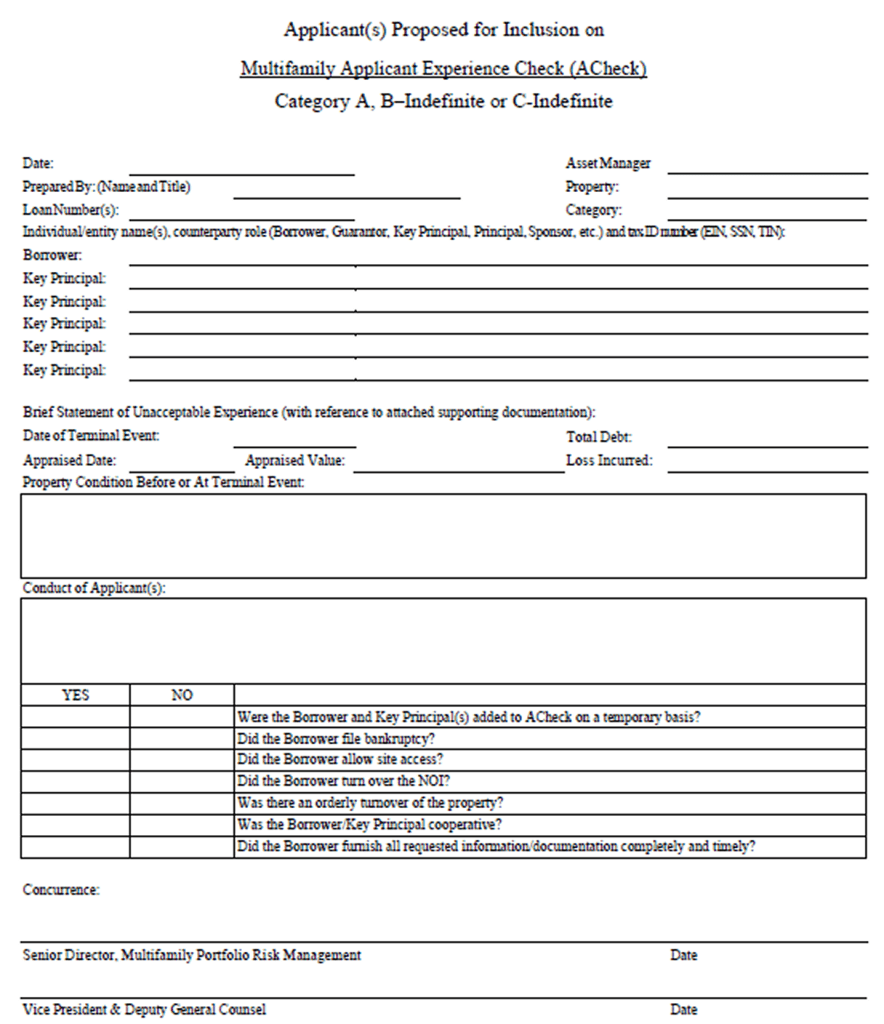
The original process ran on a paper form. It was slow, error-prone, and one accident away from losing the data entirely. ACheck 1.0 had digitized it but kept most of the pain: no way to search nominations, a clumsy creation flow, and no workflow automation for approvals or notifications.
The Process
1. Research and Strategy
We dug into the old system and kept finding the same three issues: it was slow, nothing was automated, and it left far too much room for human error.
2. System Architecture and User Roles
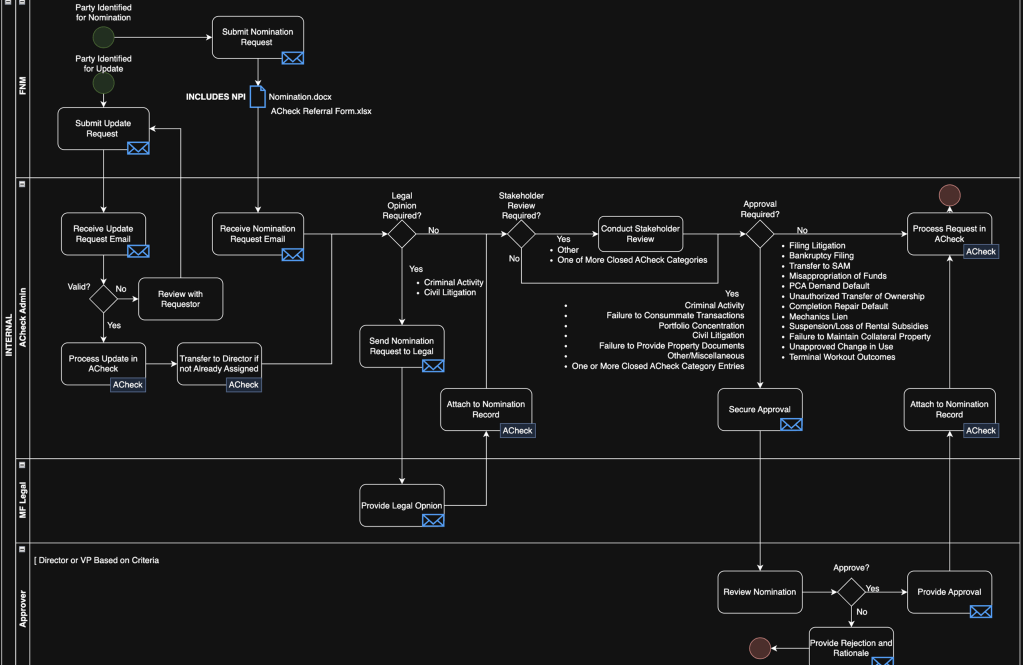
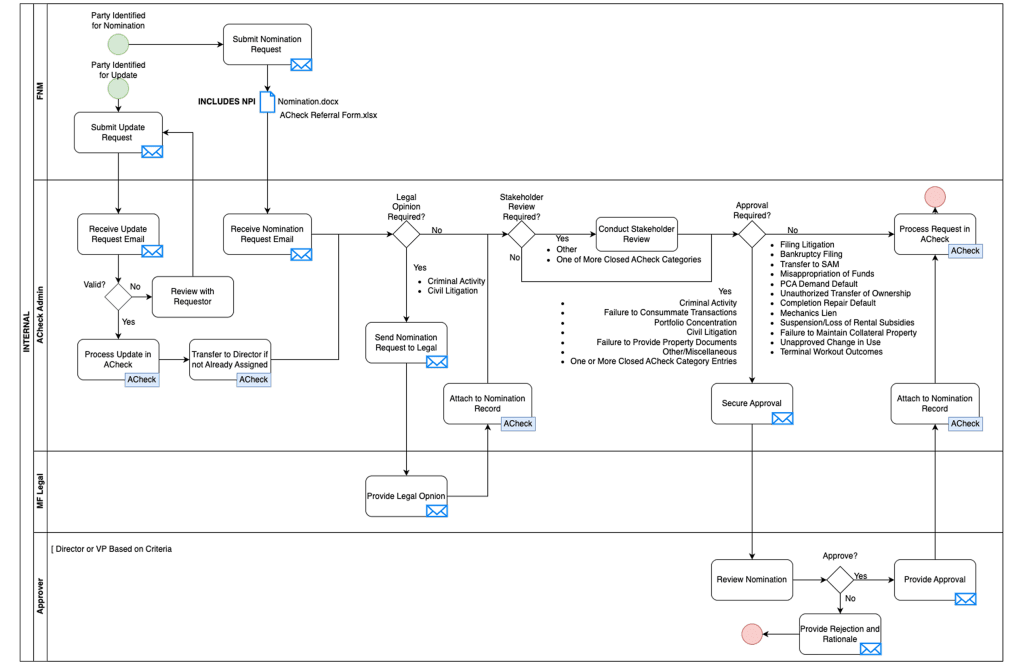
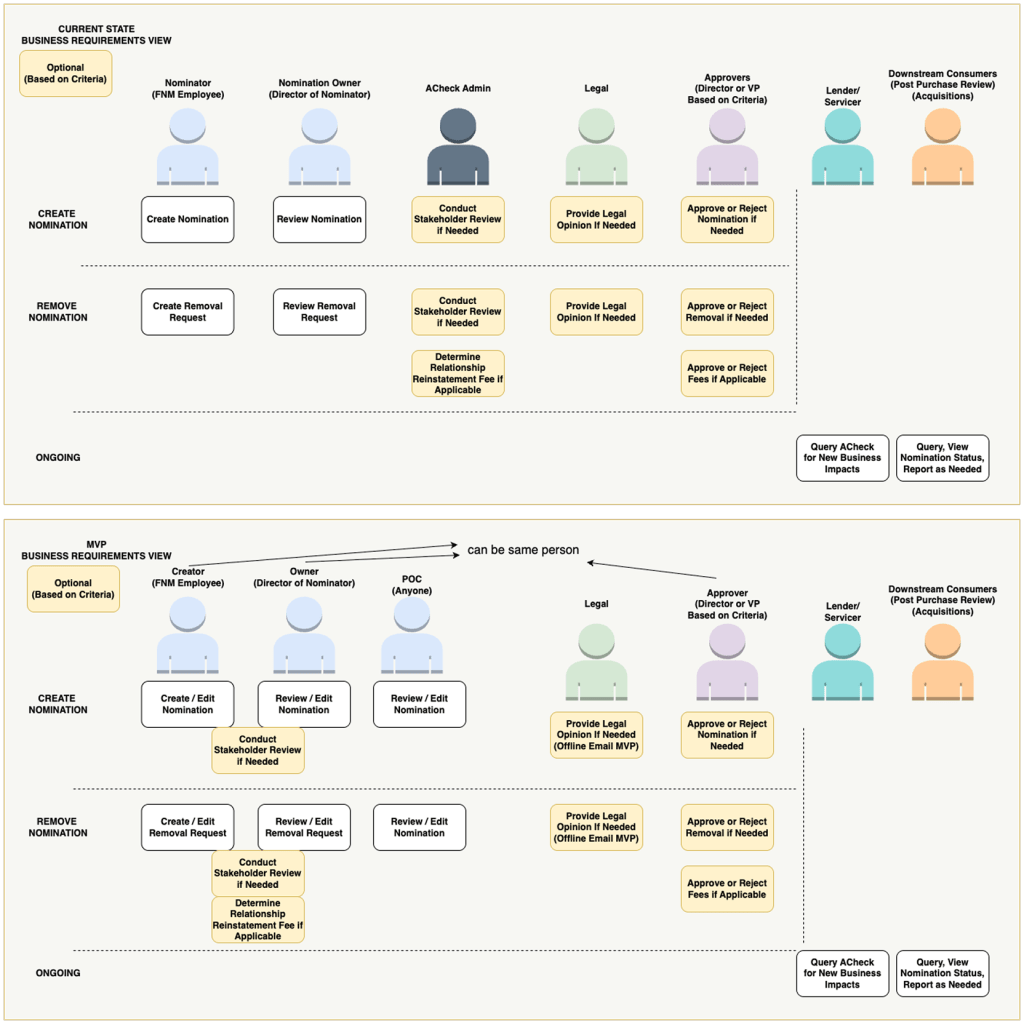
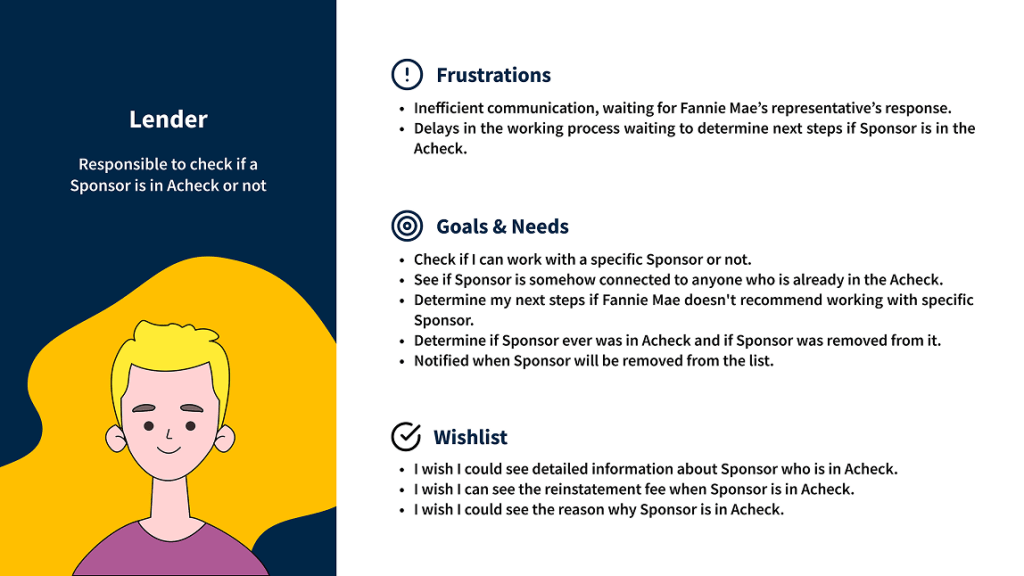
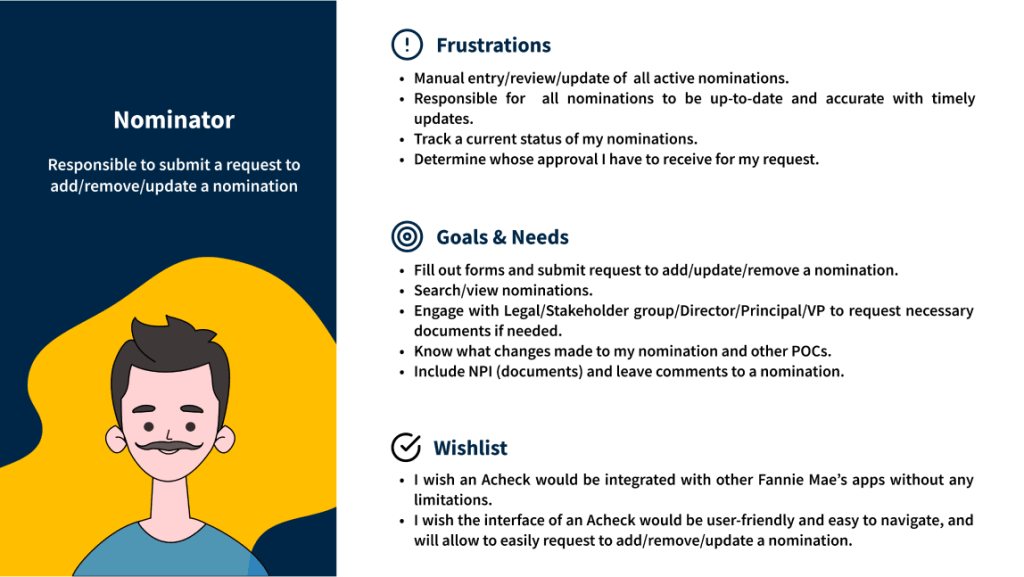
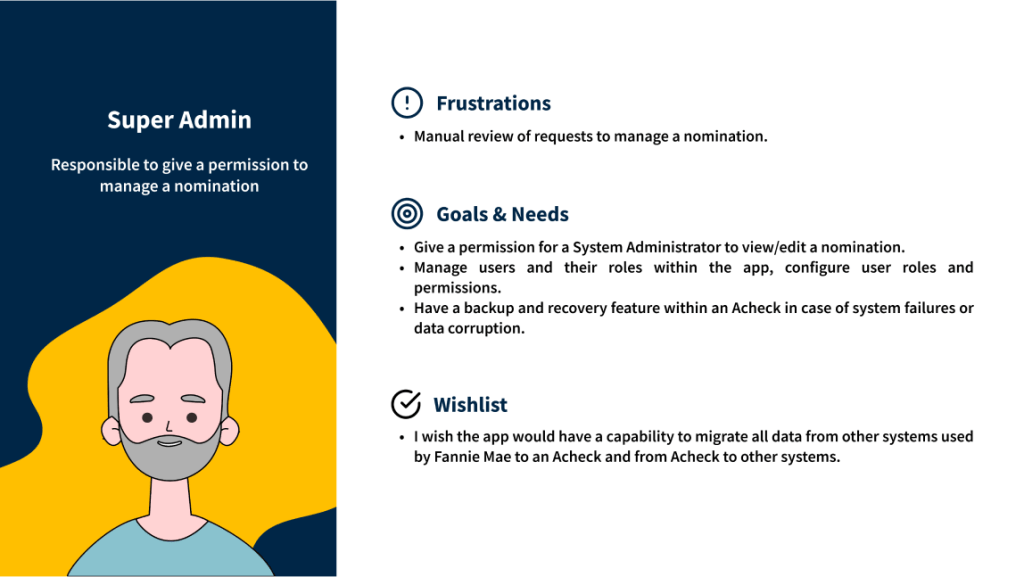
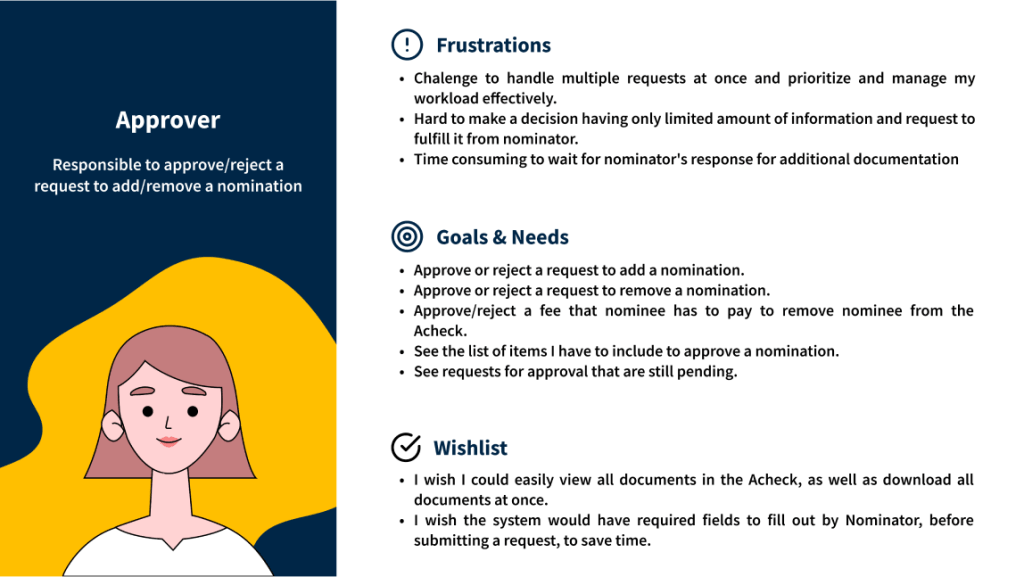
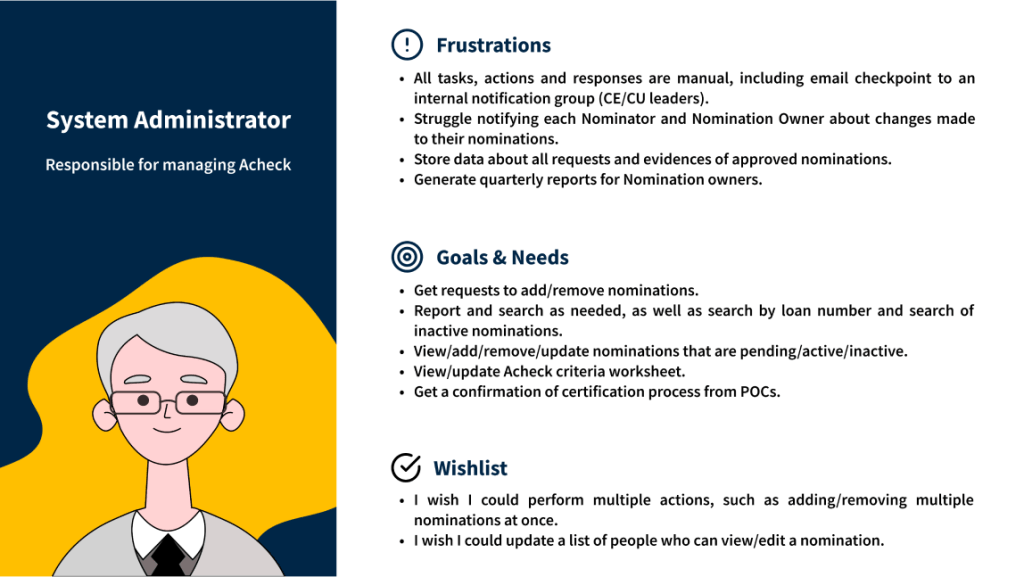
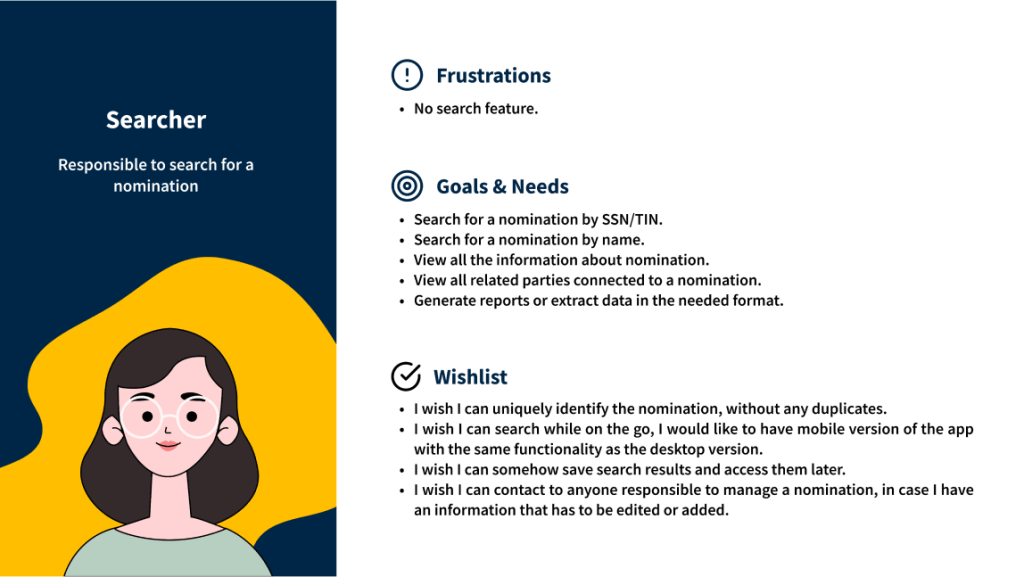
At Fannie Mae, budget doesn’t open up until the architecture is approved, so that’s where we began. We built context diagrams, user flows and a clear set of roles, and for each role a proto-persona: what hurt, what they wanted, what they actually needed from the tool.
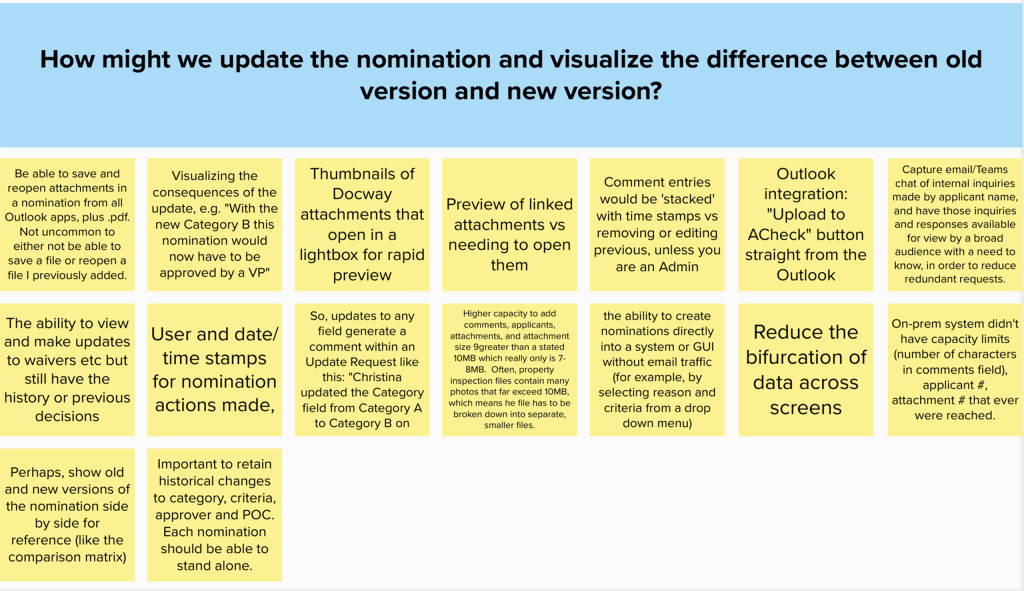
3. Creating the Wishlist and Prioritization
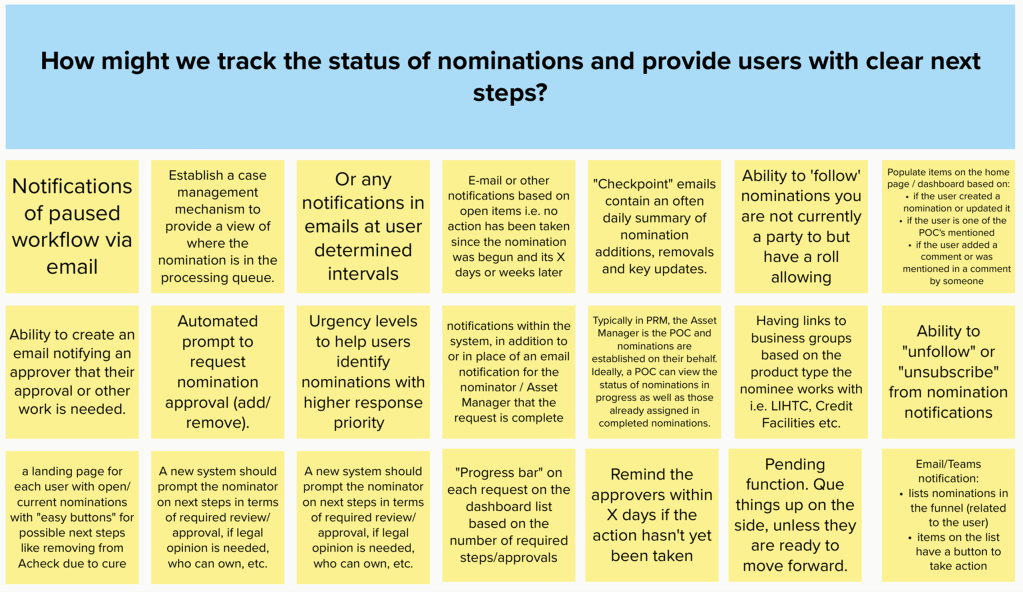
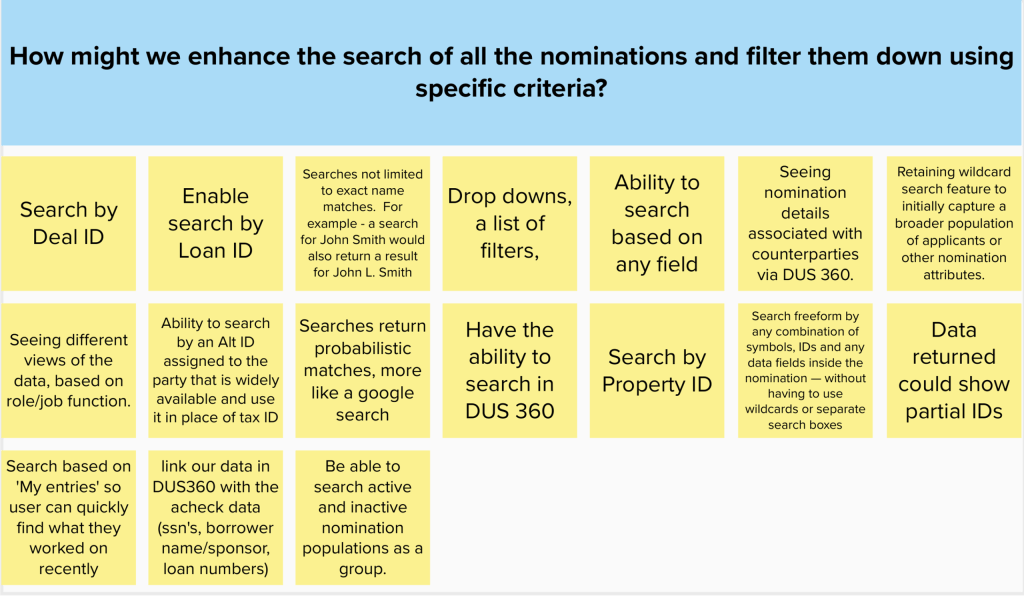
Everything that surfaced in research went onto the Wishlist. We ran workshops to rank it and pulled stakeholders in early, so the business and the design were facing the same direction before anyone built a thing.
4. Co-Designing and Rapid Iteration
With the list ranked, we built low-fi prototypes. Not finished screens, just conversation starters. They let us sit down with business stakeholders and design together in real time, making decisions with them instead of presenting to them and hoping for the best.


We also used the prototypes to check feasibility with engineering early, so the MVP was both something people wanted and something we could actually build. Getting both at once is rarer than it should be.
5. High-Fidelity Prototyping and Design System
Once the concepts held up, we moved to high fidelity, leaning on the growing design system to keep everything consistent. Every component and token was documented in Figma and Angular. We ran onboarding sessions with engineering so we were all using the same words for the same things: same names, same tokens, nothing lost in translation.


Execution and Testing
With the foundation in place, we kept iterating on features and testing them with business users before engineering built them. My team stayed close to the DATS process, checking that what landed in lower environments actually matched the design and the acceptance criteria.
Outcome and Impact
The numbers:
- Ahead of Schedule: We delivered the app ahead of schedule, saving valuable development time.
- Mitigated Risks: The app helped mitigate potential multi-billion dollar risks by accurately verifying loan applicants.
- Government Compliance: We satisfied government oversight requirements from the FHFA, ensuring compliance and minimizing risks.
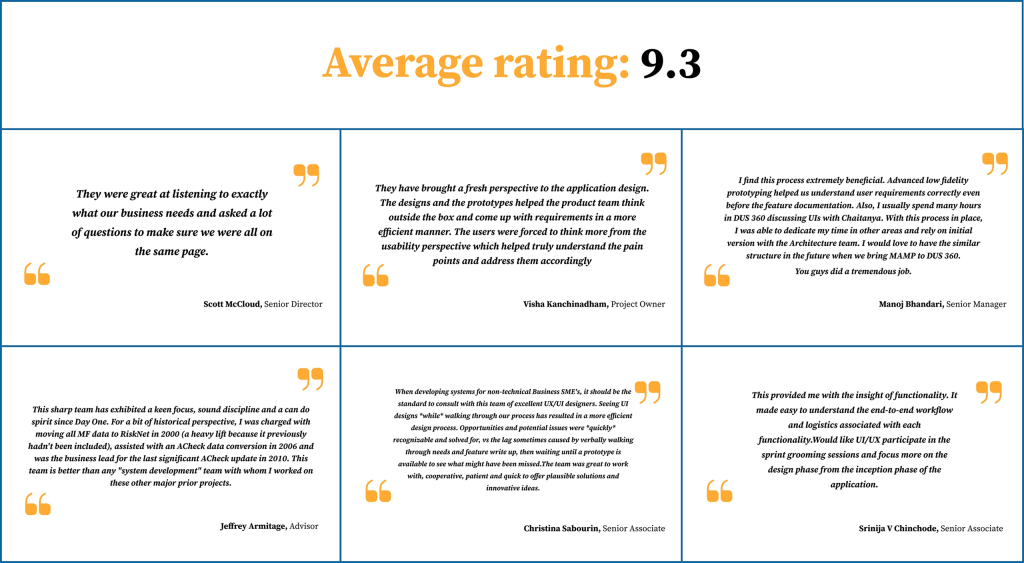
- Positive Stakeholder Feedback: The collaborative and highly engaging UX process was a major success. Stakeholders appreciated the rapid prototyping, effective documentation, and reusable components, which contributed to significant development time savings.
The real value went beyond a cleaner ACheck. The project showed that research, iteration and genuine stakeholder involvement beat the old habit of handing over a spec and hoping it comes back right.
We carried the lessons into the next one. On Property Check we swapped traditional low-fi for AI-powered prototypes, and it works even better.
 Kit Oliynyk