Sit beside them, not across the desk
iPads across more than 900 Capital One branches, covering the whole visit from the moment someone walks in to the moment they sign. An omni-channel ecosystem for customers and bankers that Apple featured as a business success story, and that is still running today.
- Client
- Capital One, Retail Bank. Customer-facing and banker-only iPad apps across the branch service blueprint.
- Duration
- 2013 to 2015. It grew into a $4M+ program, the first of its kind among the big banks.
- Role
- Lead designer. Product strategy, service design, UX research, interaction, visual and motion design, narrative.
- Scope
- More than 900 branches across half the country. Kiosks, touch panels, banker iPads and watches, and the customer's own phone.
Outcomes
- A modern omni-channel strategy for reaching customers in physical branches and beyond.
- An Apple-recognized ecosystem: the branch iPads made Apple's own business success stories.
- A large increase in branch sales and brand recognition.
- iPads in 900+ branches, a $4M+ program, first among the major banks.
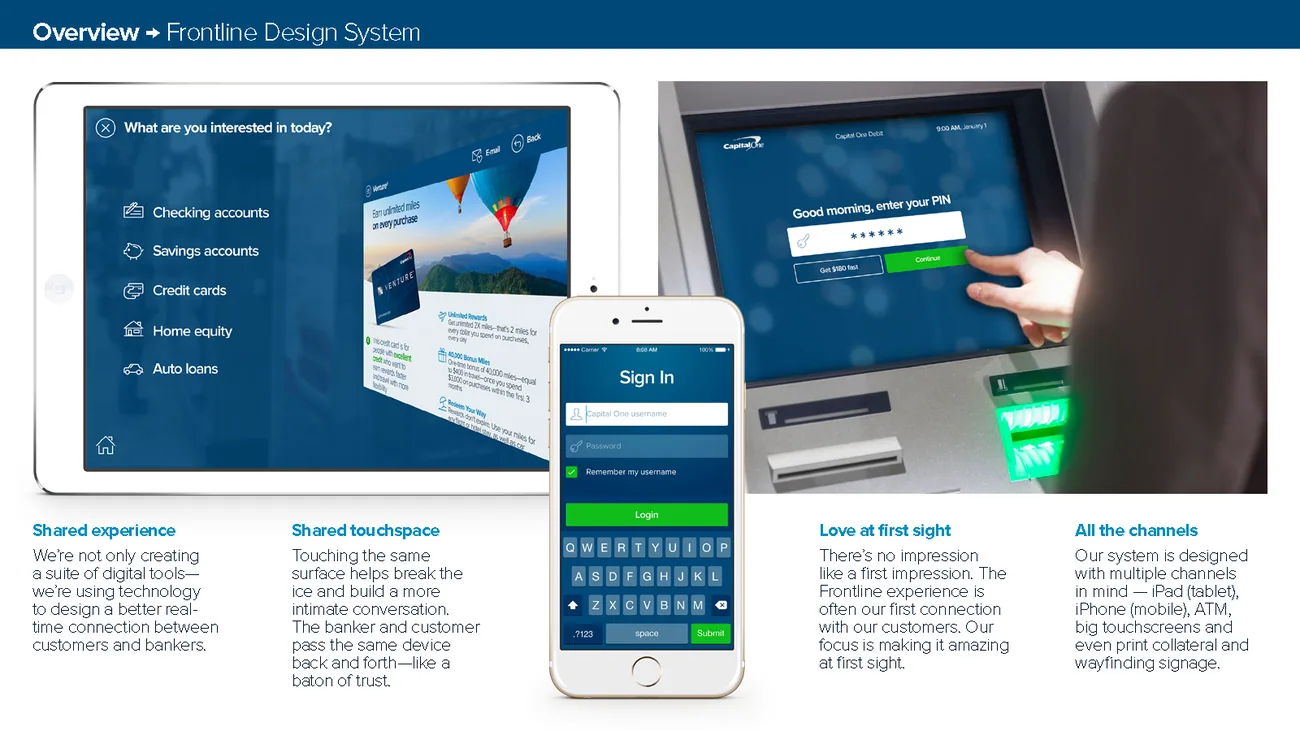
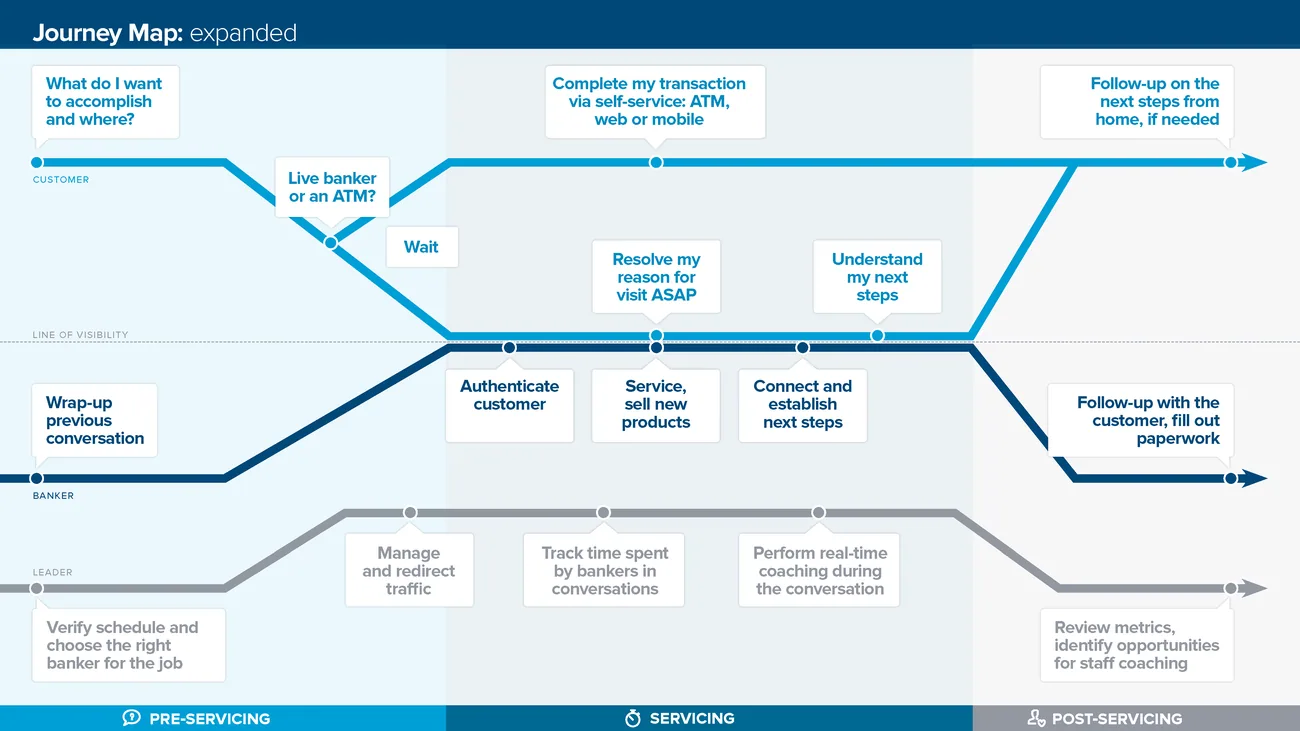
- The full service blueprint: check-in kiosks, touch panels, banker iPads and watches, and the customer's phone, all in one loop.
- Three patented interactions came out of this work: card stacking and the origami unfold on the branch iPads, and the horseshoe slider that shipped on CashTapp.
- Accessibility and VoiceOver, content in several languages, and the option to choose a banker who speaks yours.
Every design is service design
A building isn't bricks. It is a set of systems that all have to work together, and so is a branch.
I was a lead designer on a team serving more than 900 branches across half the country. It grew into a $4M+ project, the first among the big banks, to put iPads in hundreds of retail locations. I led design and build on the whole set of iPad apps, customer-facing and banker-only, covering the entire branch visit from the moment someone walks in to the moment they sign.
At this scale, every design is service design. You work in digital and physical at once, with customers and bankers in the same picture, and you stop thinking about individual products and start thinking about the whole ecosystem, because in a branch nothing stands on its own.
I learned systems thinking early, because both my parents are architects. They taught me that a building is a set of systems that all have to work together: structure, water, gas, power. They also taught me how people move through a space, the sight lines and the footpaths, and that turned out to be exactly what designing a branch needed.
We moved the office into a branch
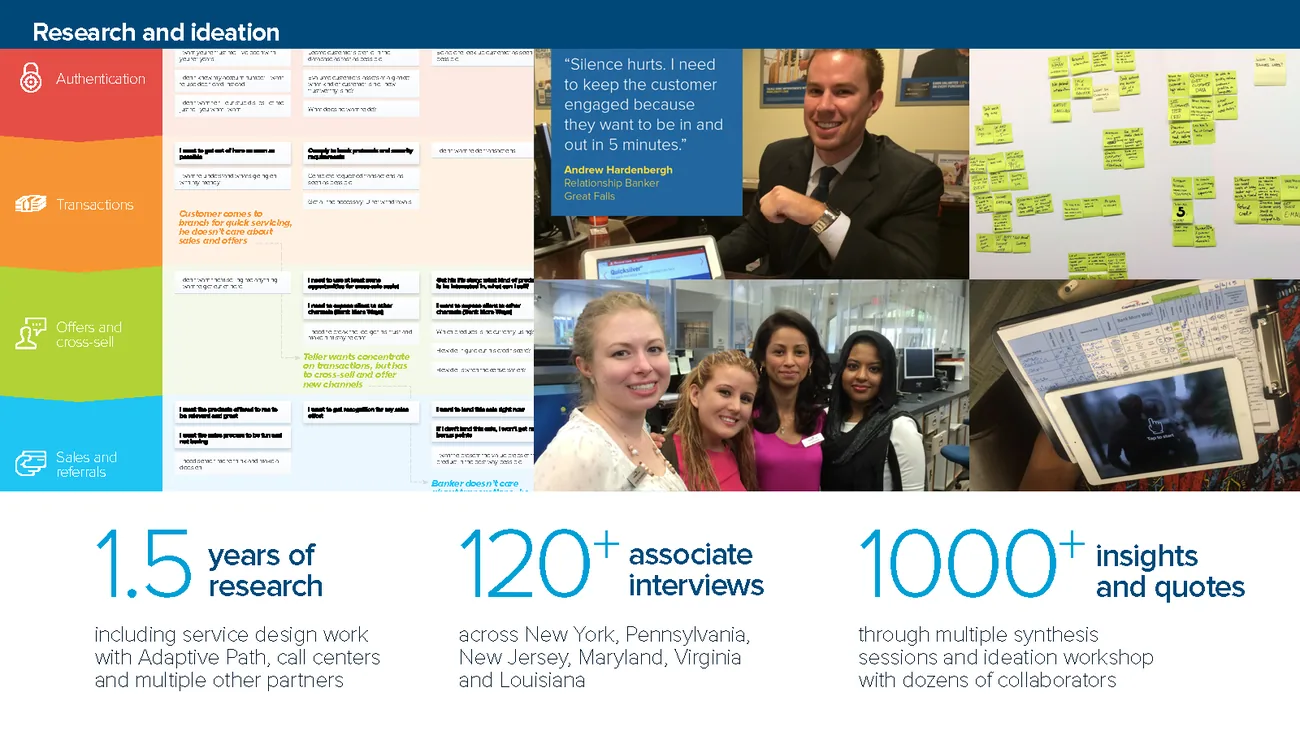
Understanding the everyday life of bank associates matters every bit as much as customer research. So we made research into a reality show: we set up a mobile product-development office in the middle of one of our branches. We worked side by side with our colleagues, learned a ton, and, most importantly, earned their trust in our design decisions by sharing our process, teaching them what we were doing and why, and what we could achieve together.
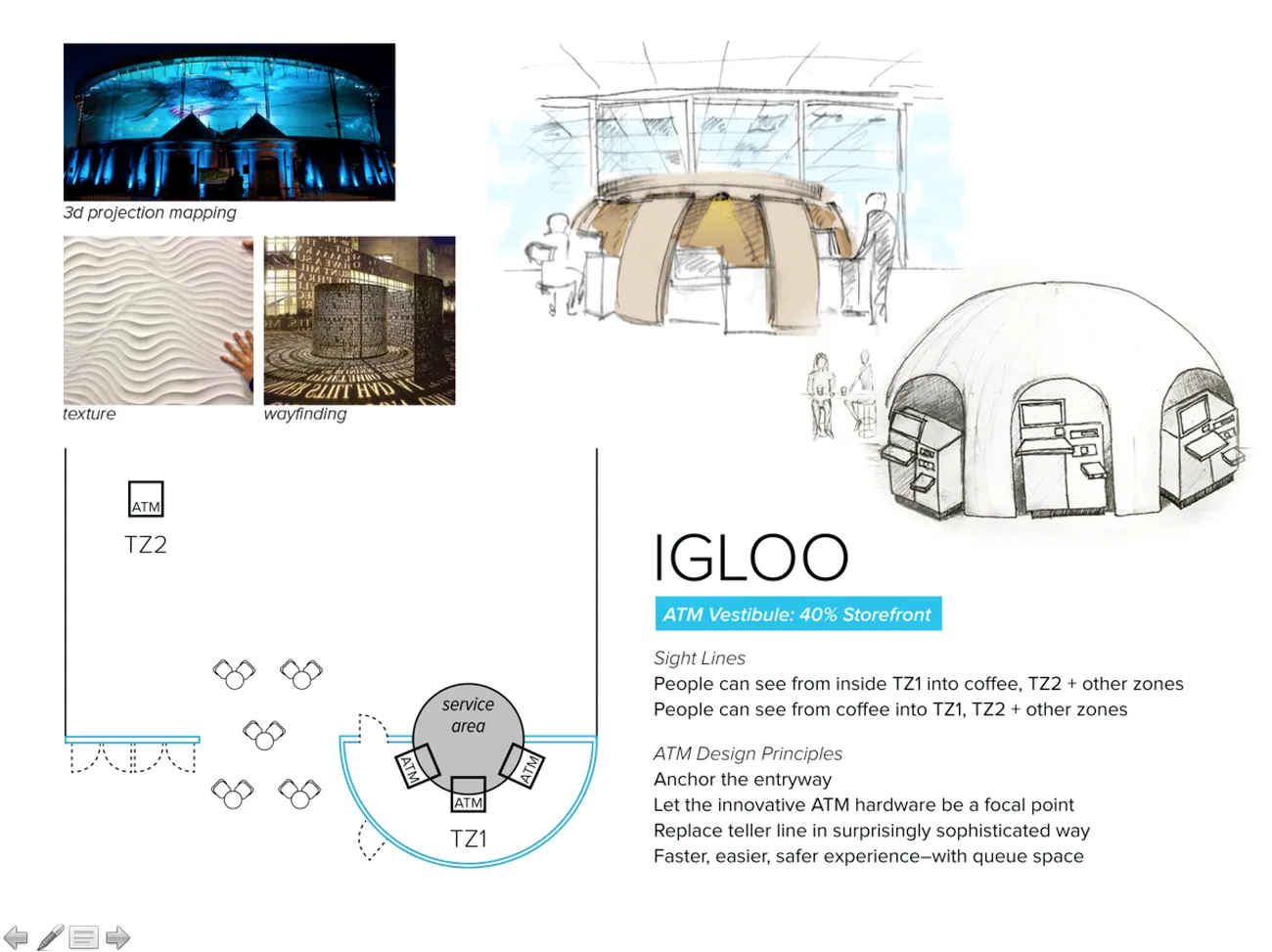
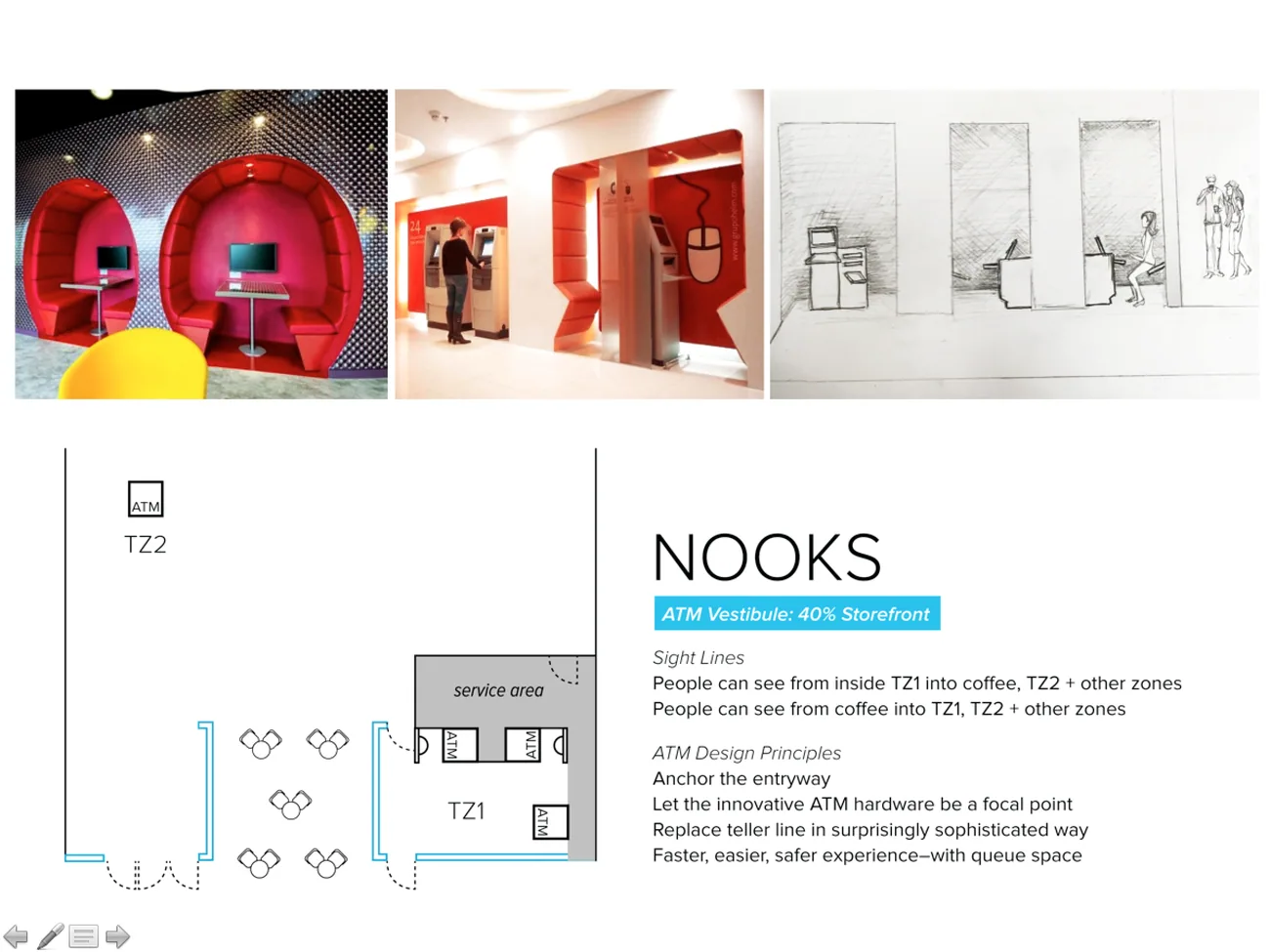
Architecture takes years, so architects model things before they commit to them. I borrowed the habit. We built branches out of LEGO, mocked up full-size ATMs in foam core, and sketched constantly.
The one idea that mattered
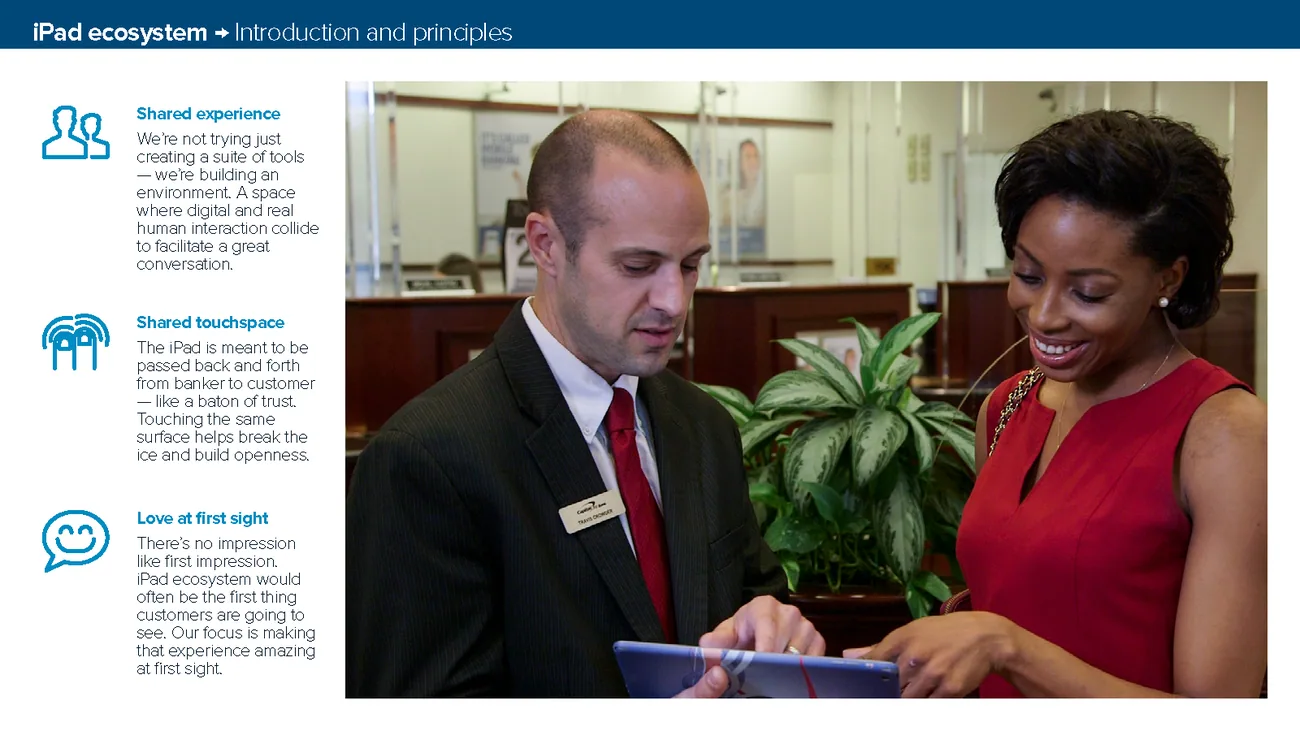
Hand a banker a tablet and the desk stops being a barrier between two people.
All that work in physical space led to the idea that mattered most: sit beside the customer instead of across a desk from them. The iPad alone proved it out. From there we built the rest of the ecosystem together with the bankers, not just for them.
Because change like this takes years, I put real effort into the narrative itself: the story that keeps a vision alive in a company long enough to actually land.
Content is design
We started with the customer-facing apps, which were sales tools at heart. That is where progressive disclosure clicked: give people exactly enough at exactly the right moment, and nothing more. We also learned, the hard way, that content is design. We dropped the lorem ipsum and worked with real numbers and real words, because placeholder content hides the real problems.
We brought in content strategists to replace the bank-speak with plain language. We even reworked the legal disclaimers, breaking the usual wall of fine print into pieces a person could actually get through.
Then the banker tools
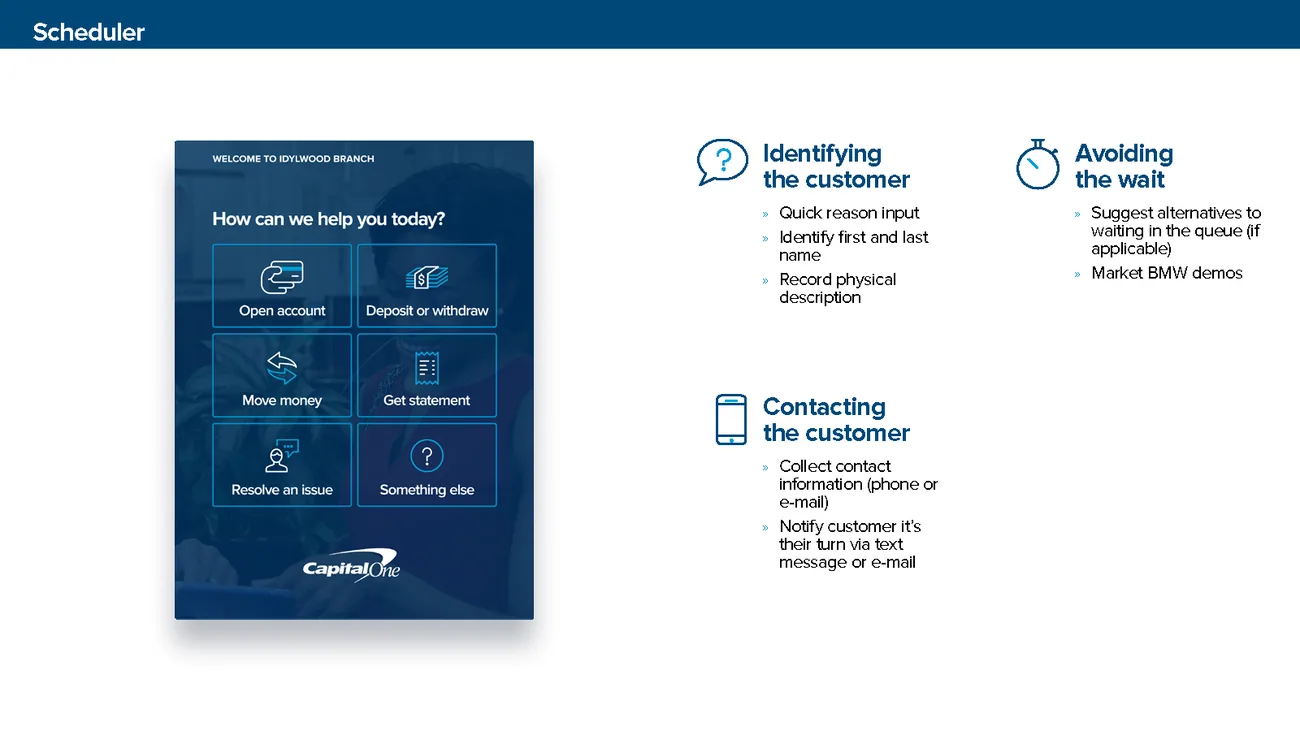
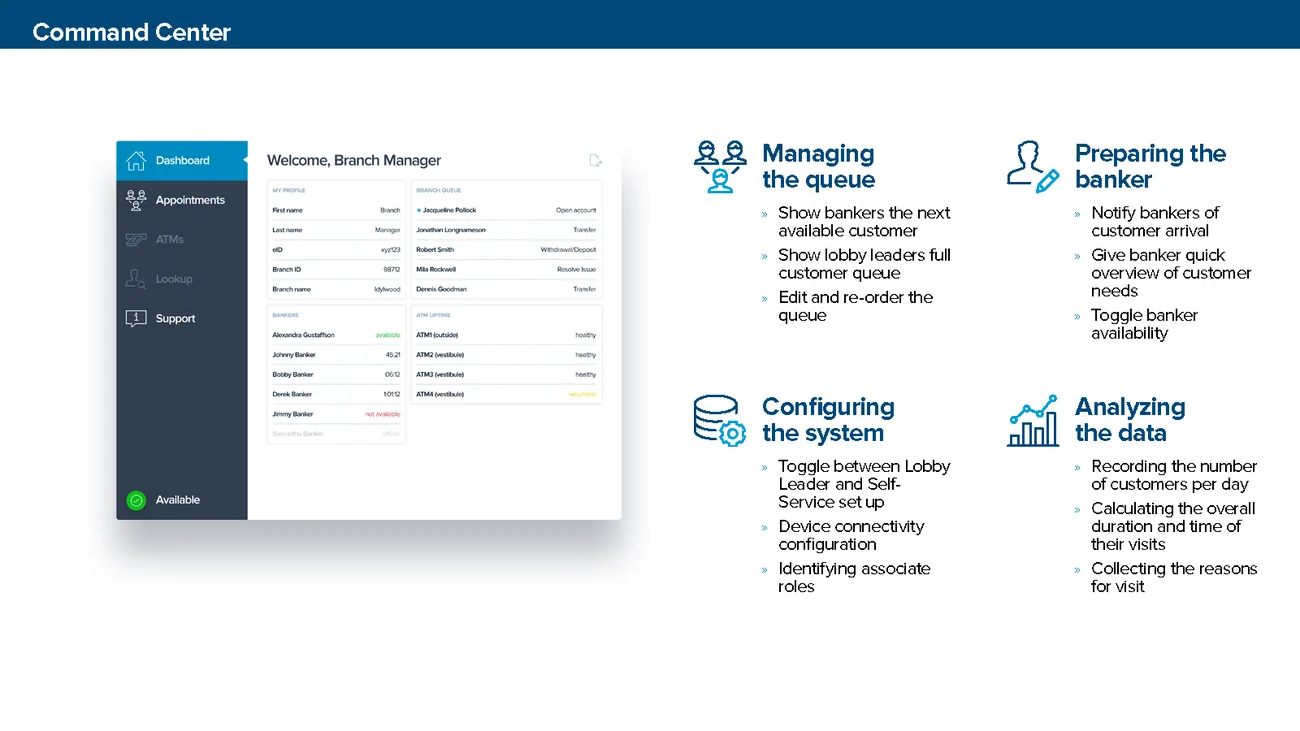
As the apps proved themselves and trust grew, we moved into the rest of the service blueprint. We built the banker-facing tools too, like the lobby management system, and closed the loop across check-in kiosks, touch panels, banker iPads and watches, and the customer's own phone.
Inclusion is good business
Even the smaller segments add up to billions. Leaving them out means leaving money on the table.
At this scale, inclusion is simply good business. We built in accessibility and VoiceOver for customers with disabilities, translated the content into several languages, and let people choose a banker who speaks theirs.
This took years and a lot of good people to pull off. The work became the foundation for how Capital One thought about branch banking, and it is still running today.
Apple told the story
The branch iPads made it into Apple's own business success stories. It took years and a lot of good people, and the work still runs in Capital One branches today.