- Client: United States Postal Service
- Duration: 2019
- Role: design leadership, product strategy, product management, business alignment, narrative design, and communications
- Goal: Redesign a mobile app for USPS
- Outcome: Defined the product strategy, unified information architecture, and native-app direction for a postal experience serving 25M+ customers. USPS shipped a unified, native Informed Delivery app along these lines in 2025.
I was head of design at a federal contractor, leading a team of designers, researchers and business analysts to rebuild the USPS mobile app from the ground up.
The old app was a website wearing a native costume: a web front-end stuffed into a wrapper, slow and clunky, doing neither job well. We replaced it with real native apps for iOS and Android.
The product strategy needed work too. USPS ran two separate apps, one for servicing (USPS Mobile) and one for tracking your mail (Informed Delivery). Our research kept saying the same thing: people wanted one app, not two.
Then there was the culture gap. The team was used to waterfall, where everything’s planned up front and nothing surprises you, and an iterative, research-led approach felt risky by comparison. Most of the feature list was locked before anyone had done the research to back it up.
So that’s where we started. Millions of people use the postal service, all of them differently, and we had to design for that range without blowing the federal timeline.
After a few dozen interviews, three people kept showing up:
- Mohammed: a logistics manager, who frequently ships packages on behalf of their company. Mohammed is a power user and cares about staying in full control of his operations while saving time in his routine.
- Chen: a small shop owner, who ships goods to the customers. Chen cares about tracking her packages to make sure the purchases are delivered to her customers on time.
- Tyrone: a regular person who is not familiar with postal services as a whole. Tyrone is rarely shipping anything but is frequently receiving packages from making purchases on the internet.
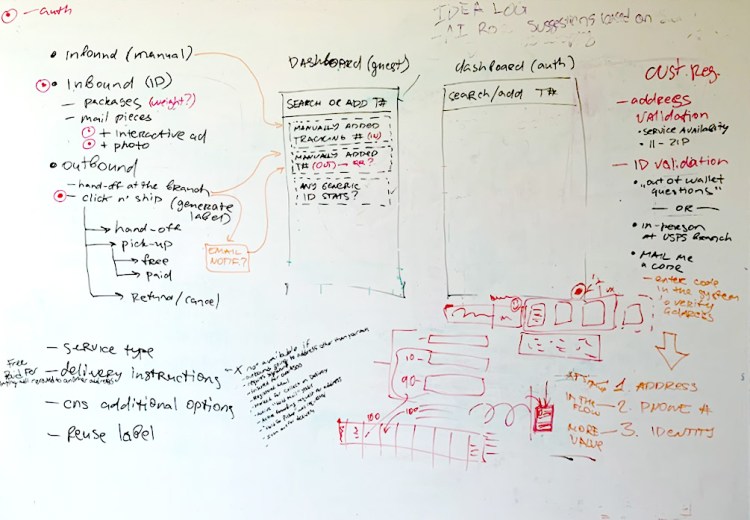
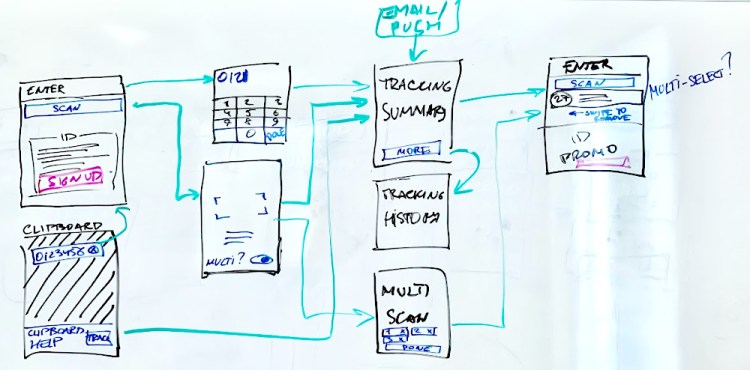
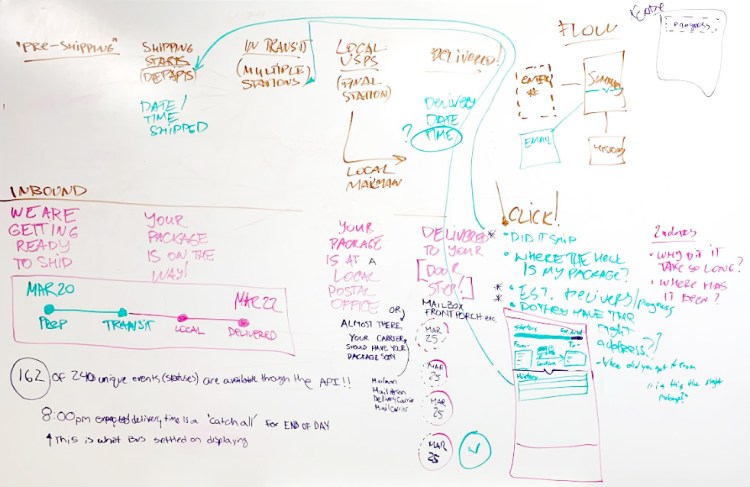
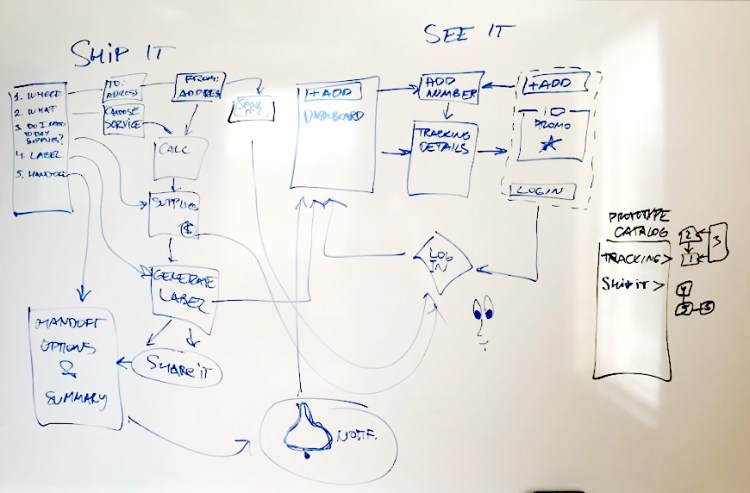
Personas, scenarios and journey maps were new to our partners, so we didn’t hide the work. We shared the process, explained the reasoning, and over time they came around. Eventually they trusted us enough to rewrite most of the user stories and the whole roadmap around what people actually needed.
We were a small team facing a fair amount of potential pushback, so I kept everything in low fidelity. Paper, whiteboards, nothing precious. It’s easier to change direction before anyone has fallen in love with a design.
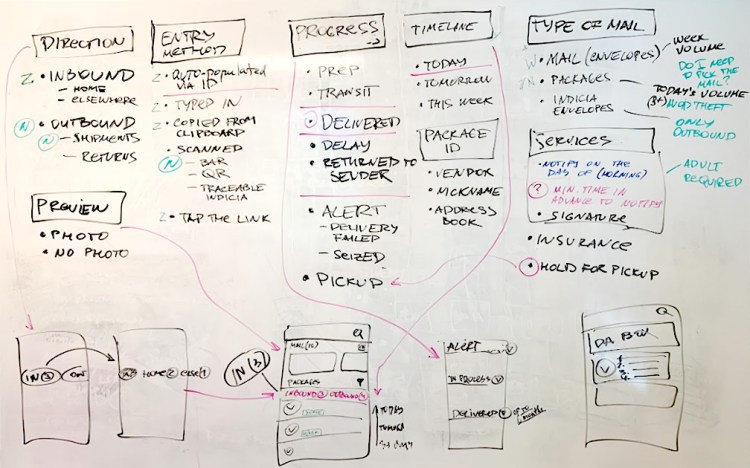
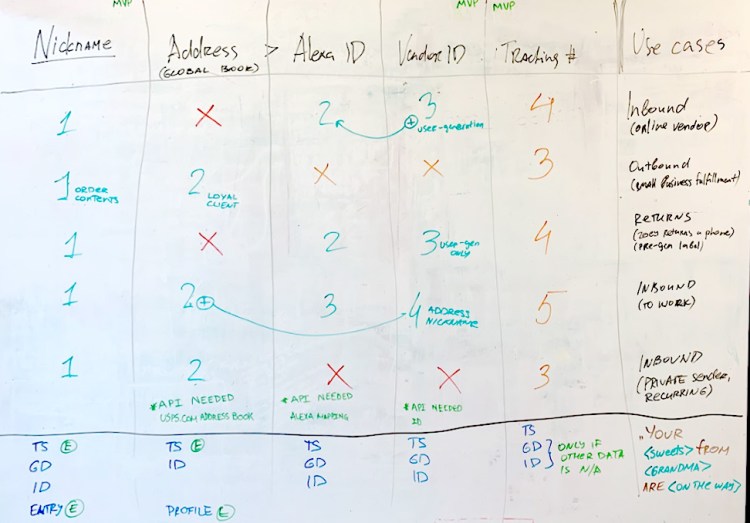
The inherited feature list also meant rethinking how we ran sprints. I brought in faceted feature analysis so we could rank features as a team, weighing user need against build difficulty against business priorities, all in one room and out loud.
I also set up a multi-track sprint schedule so research kept feeding design while we kept showing the work to stakeholders. There were no big reveals, which is the whole point. People who see the work evolving don’t get ambushed by it.
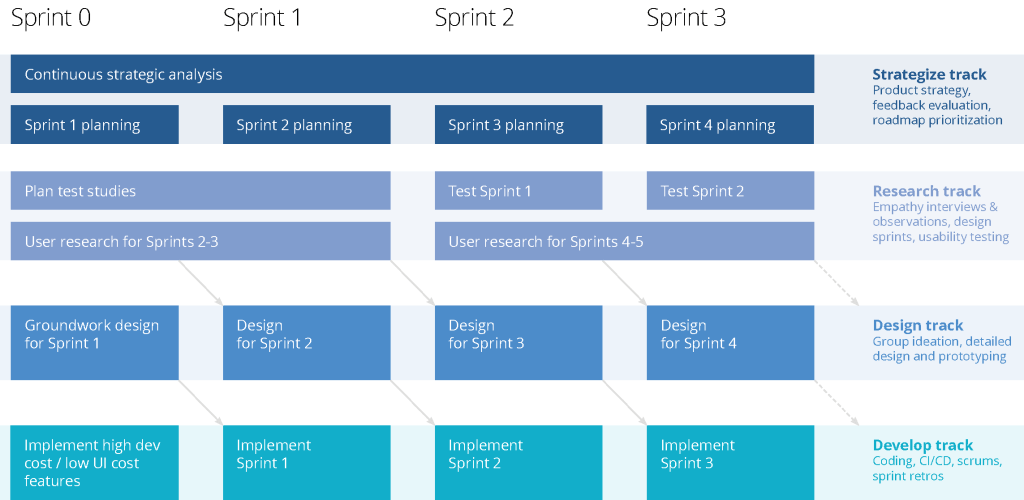
My goal was to prototype in code as efficiently as possible instead of producing too many high-fidelity design artifacts. I’ve coached my team to work side-by-side with our engineers to develop reusable components and iterate on the experience together.
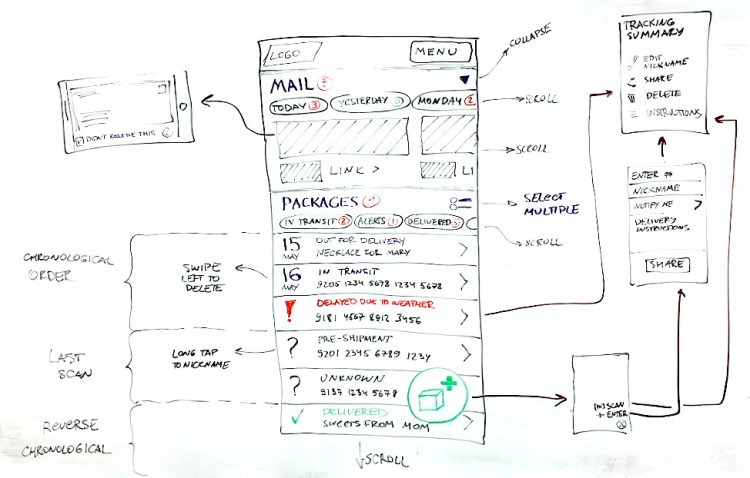
Within just a few weeks we were able to sketch a new product roadmap and update a set of features to match the needs of our customers.
Together with our stakeholders, we’ve re-defined an information architecture and the application flow. We’ve introduced a new human-centered content strategy to help customers like Tyrone feel more confident with postal services. And we’ve designed a centralized dashboard to help customers like Chen and Mohammed stay in control of their shipments and track packages on the go.

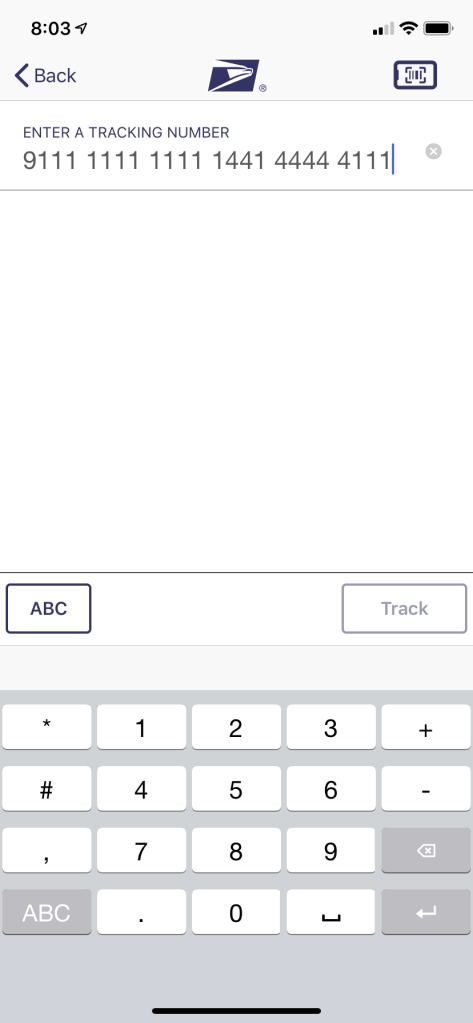
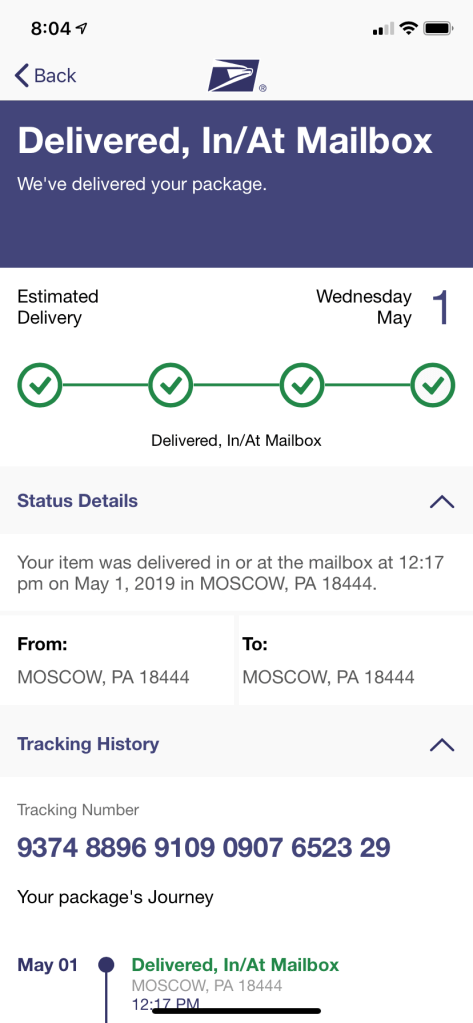
I handed it off and the work kept moving. If it ships the way we built it, 25 million people get a postal app that respects their time. Not a glamorous goal, but a real one.
 Kit Oliynyk